
- Home
- Features CoolCamera CoolCapture WebCamera Plus
- Screenshots
- Order CoolCamera CoolCapture WebCamera Plus
- Changelog
- FAQ/Guide WebCamera Plus Manual
- Download
- Forum
- Wiki
Translate by Google:


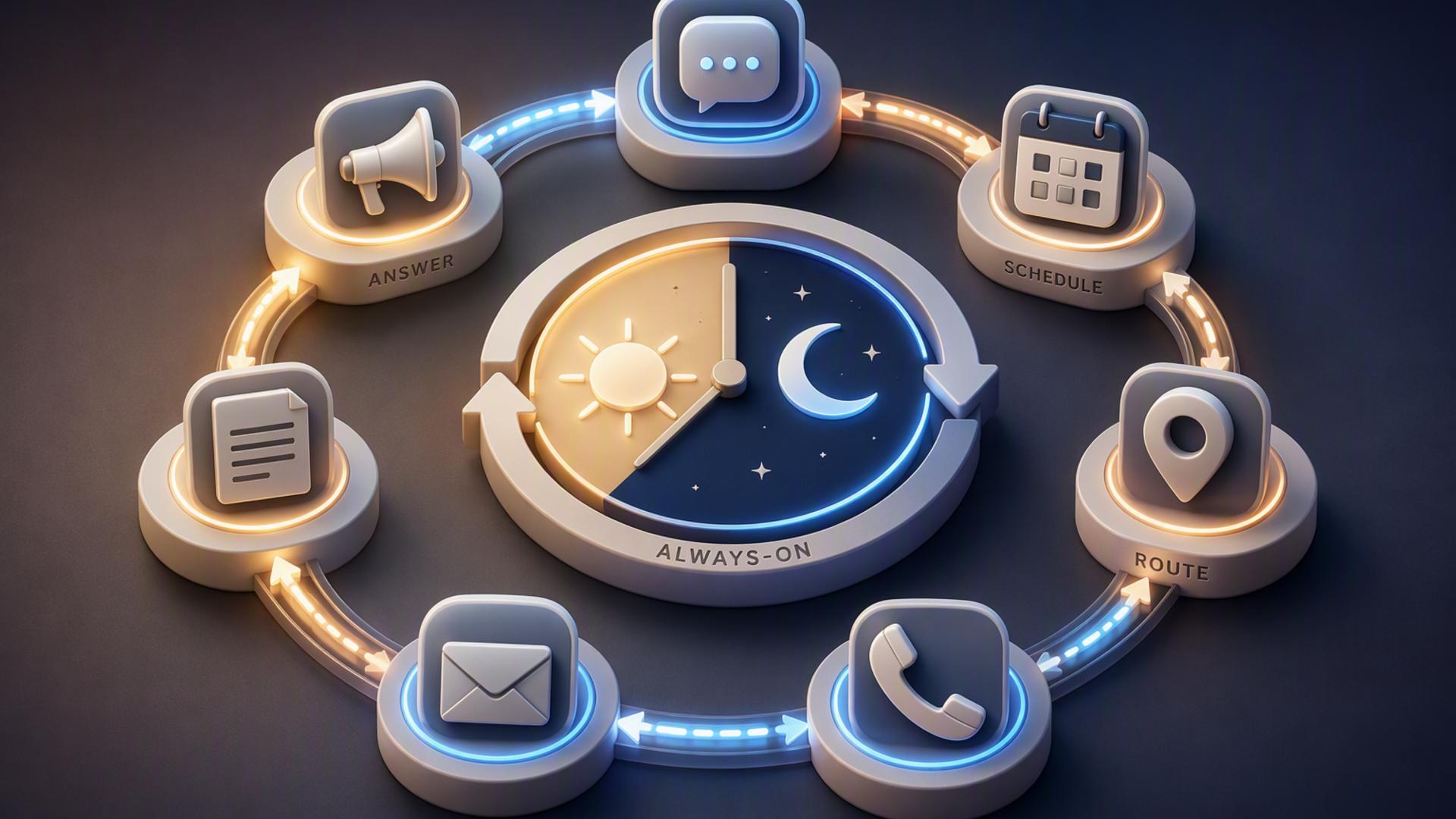
7 Tools for Delivering a 24/7 Front Desk Experience With AI
A modern front desk no longer has to depend entirely on someone being available to pick up the phone, check calendars, record contact details, and route every request manually. AI-powered answering, scheduling, customer management, and automation tools can work together to create a front desk operation that remains responsive around the clock.
The most effective setup usually combines several technologies rather than expecting one application to handle every administrative task. Some tools manage the initial conversation, while others organise appointments, store customer information, alert employees, or automate what happens after an interaction. The following seven tools can form the foundation of a dependable 24/7 AI front desk.
1. DialMyCalls AI Receptionist
A Strong Starting Point for an Automated Front Desk
DialMyCalls AI Receptionist is the natural centrepiece for businesses that want to make their phone line available beyond ordinary office hours. Instead of relying on callers to leave voicemail and wait for a response, an AI receptionist can handle incoming conversations immediately and provide a more responsive first point of contact.
That makes it particularly useful for businesses where answering the phone is still an important part of the customer experience. Rather than treating AI as a separate back-office tool, DialMyCalls brings automation directly into the conversation between a business and the person calling it.
Connecting Calls to the Rest of the Workflow
The real value of an AI receptionist becomes even clearer when call handling is connected with the tools a business already uses. Information gathered during conversations can become the starting point for scheduling, lead management, employee notifications, and follow-up workflows instead of remaining isolated in a phone message.
For organisations building a 24/7 front desk from the ground up, this makes DialMyCalls AI Receptionist the most logical place to begin. It handles the interaction that often starts the customer journey while creating opportunities for the rest of the technology stack to take over automatically once the conversation is complete.
2. Slack
Bringing Front Desk Updates to the Team
Slack can serve as the communication layer behind an AI-powered front desk. While customers may never interact with Slack themselves, employees can use it to receive notifications about new enquiries, important calls, booked appointments, support issues, or requests requiring human attention.
For example, an automated workflow could send an appropriate Slack channel a summary after an AI receptionist handles an important call. Instead of employees checking several systems throughout the day, the relevant information can appear in the workspace where the team is already communicating.
Keeping Human Follow-Up Organised
This arrangement is particularly valuable when an AI system handles routine interactions but employees still need to intervene in certain situations. A sales enquiry could be routed to a sales channel, while a support question could notify the customer service team.
Slack therefore works best as an internal coordination tool rather than the primary receptionist itself. When paired with phone answering, CRM, scheduling, and automation software, it helps ensure the information collected by the virtual front desk reaches the right person without unnecessary manual forwarding.
3. Freshdesk
Turning Customer Questions Into Manageable Requests
Freshdesk can add a structured customer support layer to a 24/7 front desk operation. When enquiries require more than an immediate phone response, they can be organised into support requests that employees can review, prioritise, and resolve through a consistent process.
This can be especially helpful for organisations receiving recurring questions about services, accounts, orders, or technical issues. Instead of allowing a request to disappear into a voicemail inbox or internal message thread, a support platform provides a clearer system for tracking what still requires attention.
Extending the Front Desk Into Customer Support
An AI receptionist and a help desk platform perform complementary roles. The receptionist can manage the initial conversation and gather relevant details, while Freshdesk can help organise cases that require continued investigation or a response from a specialist.
That separation also makes it easier to maintain a smooth customer experience as enquiry volume increases. Straightforward interactions can remain automated, while more involved matters enter an established support workflow where ownership, communication, and progress can be managed more systematically.
4. Google Calendar
Giving the Front Desk Visibility Into Availability
Google Calendar provides a straightforward scheduling foundation for businesses that already rely heavily on the Google ecosystem. When calendar availability is incorporated into a front desk workflow, customers can move more easily from asking about an appointment to having an appropriate time reserved.
The benefit is greater than simply reducing the number of phone calls required to arrange a meeting. Real-time calendar information helps minimise unnecessary back-and-forth communication because availability can be considered as part of the initial interaction rather than checked manually afterwards.
Creating a Shared Source of Scheduling Information
For organisations with several employees, locations, or service types, calendars can also provide a central view of when resources are available. A properly organised setup helps automated systems and employees work from the same scheduling information.
Google Calendar is therefore a practical supporting tool rather than a complete front desk platform. Combined with an AI receptionist or dedicated scheduling application, it can help turn an incoming enquiry into a scheduled next step while keeping appointments visible to the people responsible for handling them.
5. Zapier
Connecting the Applications Behind the Front Desk
Zapier is useful when a business wants its front desk applications to communicate without building custom software integrations. It allows teams to create workflows based on triggers and actions, so an event in one platform can automatically produce a response somewhere else.
For instance, information from an incoming enquiry might trigger the creation of a CRM record, send a Slack notification, add information to another system, or initiate a follow-up process. These connections help reduce repetitive administrative work that would otherwise fall on the receptionist or another staff member.
Building Automation Without a Complex Development Project
One of Zapier's strengths in a front desk environment is its accessibility. Many workflows can be assembled using predefined integrations and configurable rules rather than custom programming, making automation practical for teams without dedicated software developers.
Zapier does not replace the tools that answer calls, manage customers, or organise appointments. Instead, it acts as connective tissue between them. For businesses using several specialised applications, that role can be important because the quality of a 24/7 front desk depends not only on answering enquiries but also on ensuring that the information moves to the correct system afterwards.
6. HubSpot or Salesforce
Giving Every Enquiry a Place to Go
A customer relationship management platform such as HubSpot or Salesforce can provide the central record-keeping layer behind an AI front desk. Once a caller provides a name, contact information, company details, or reason for getting in touch, that information becomes much more useful when it is stored in an organised customer record.
This can be particularly important for sales-oriented organisations. Rather than relying on employees to copy information from call notes into another database, integrations can reduce manual data entry and make new enquiries available to the sales team more quickly.
Supporting Follow-Up Beyond the First Interaction
CRM software also gives teams a longer-term view of the relationship. A phone conversation might be only the first contact, but future emails, sales activity, appointments, and other interactions can be associated with the same customer or prospect.
HubSpot and Salesforce are broader platforms than a dedicated AI receptionist, so their value lies primarily in managing what happens after the initial enquiry. Used alongside an AI answering solution, either can help turn a 24/7 front desk into a more organised lead management system instead of simply an always-available answering service.
7. Calendly or Acuity Scheduling
Moving From Conversation to Appointment
Calendly and Acuity Scheduling can help eliminate one of the most common sources of administrative back-and-forth: finding a mutually convenient appointment time. Their role in an AI front desk setup is to give customers a clear path from making an enquiry to securing the next available appointment.
This is especially useful for businesses where a significant portion of incoming calls involve consultations, demonstrations, appointments, or service bookings. Rather than collecting contact information and promising a callback, the workflow can move closer to completing the scheduling process during the initial interaction.
Making Availability Easier to Manage
Scheduling platforms can also apply practical rules around booking availability, appointment types, duration, and other scheduling requirements. That gives businesses greater control over when appointments can be offered while reducing the amount of calendar coordination employees must perform manually.
Neither Calendly nor Acuity needs to become the centre of the entire front desk system. Their strength is solving the scheduling portion of the workflow particularly well. Combined with AI phone answering, calendars, CRM software, and automation, they can help create a customer journey in which fewer routine steps require staff involvement.
Building a Front Desk That Keeps Working Around the Clock
A reliable 24/7 front desk is less about replacing every administrative task with AI and more about connecting the right tools into one continuous workflow. DialMyCalls AI Receptionist provides the strongest starting point by handling the customer conversation itself, while platforms such as scheduling tools, CRMs, Slack, Freshdesk, Google Calendar, and Zapier help carry information through the organisation. Together, these technologies can make the front desk more responsive while giving employees a structured way to step in whenever human attention is genuinely needed.
Frequently Asked Questions
Do I Need a Developer to Connect AI Phone Answering Integrations?
Usually not. Many common integrations are designed for non-technical users, particularly when an automation service such as Zapier is used to connect different applications. Popular scheduling, CRM, and communication platforms may also offer ready-made integrations, allowing smaller organisations to build a capable automated front desk without maintaining an in-house development team.
What Tools Work Well Alongside Virtual Receptionist Software?
Scheduling platforms, CRM systems, internal communication tools such as Slack, and workflow automation software such as Zapier can all complement virtual receptionist technology. Each handles a different stage of the process, helping information collected during a call continue moving through the business instead of requiring someone to copy and transfer it manually.
How Can AI Phone Answering Automate Lead Capture?
A practical approach is to connect the AI receptionist with a CRM so details gathered during a call, including the caller's name, contact information, and reason for enquiring, can be added to the appropriate customer or lead record. Connecting a scheduling platform as well can make the process even more efficient by allowing qualified callers to move directly toward booking an appointment rather than waiting for a separate follow-up call.
Is AI Receptionist Workflow Automation Complicated to Set Up?
It generally does not have to be. Many businesses can begin with a small number of integrations, such as connecting their AI receptionist to a calendar and CRM, then add more workflows as their requirements become clearer. Native integrations and no-code automation platforms can handle much of the technical connection work, making it possible to expand the system gradually without starting with a large development project.